
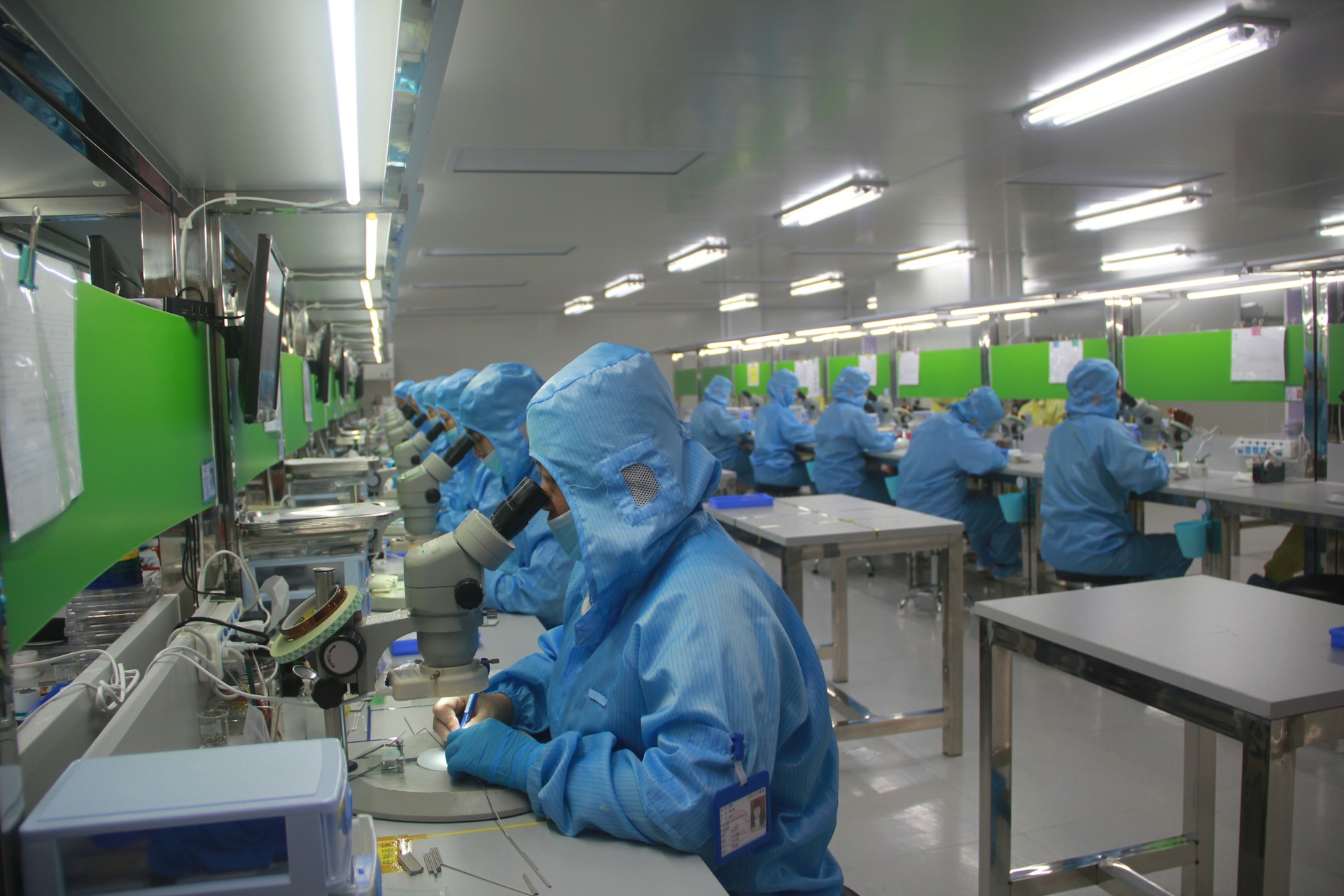
The latest macroeconomic indicators out of Denmark paint a remarkably buoyant picture for the region’s pharmaceutical sector. On paper, it looks like a resounding success story: Danish real GDP expanded by 1.9% quarter-on-quarter in the opening months of 2026, a growth spurt heavily backed by a surging industrial sector. Dig a little deeper into the data from the national statistics office, however, and it becomes obvious that this isn’t a rising tide lifting all boats. Industrial production jumped by 8.6% in March alone, but if you strip out the pharmaceutical engine, that broader manufacturing growth whimpers down to a modest 1.6%. Within the pharma sector itself, production skyrocketed by 15% in March, cementing its outsized 20% weighting in the country’s industrial index.
For a company like Novo Nordisk, whose corporate footprint is inextricably linked with Denmark’s economic identity, these figures offer a welcome macro tailwind. Yet, the stock market is refusing to hand out any free passes. Despite the manufacturing boom, Novo’s shares closed mid-week at €38.85, leaving the stock down roughly 13.04% since the start of the year and nursing a painful 35.68% loss over the past twelve months. A recent monthly rebound of 15.69% has pushed the stock 12.47% above its 50-day moving average, but it still lags 8.08% behind its longer-term 200-day benchmark. The hesitation among investors underscores a classic market conundrum: massive volume throughput is all well and good, but it means very little if it cannot be cleanly translated into bottom-line profitability.
The Structural Squeeze on Pricing Power
This disconnect was laid bare in Novo’s first-quarter financial performance. While reported revenue appeared to jump by 32% at constant exchange rates, the underlying reality was far more nuanced. When adjusting for the reversal of a previous rebate reserve tied to the US 340B drug pricing programme, core sales actually slipped by 4%. The pressure is particularly acute in the highly lucrative US market, where adjusted revenues fell by 11% due to lower realized prices and heavier discounting strategies. Even a robust 22% adjusted growth in their flagship obesity portfolio and a 6% volume-driven expansion in international markets couldn’t entirely offset the reality that pricing power is facing structural headwinds.
This tightening squeeze on drug pricing isn’t an isolated American phenomenon; it is an operational reality across Europe, driven by cash-strapped healthcare systems desperate to contain mounting costs. Healthcare providers are actively shifting away from premium-priced original biologics toward more sustainable alternatives. Take Switzerland, for instance. The Swiss Federal Office of Public Health (BAG) has made the promotion of generic and biosimilar alternatives a cornerstone of its current cost-damping strategies. The market is shifting as a result. By 2024, the biosimilar substitution rate in eligible Swiss markets had climbed to 36.4%. The financial impact of these policy shifts is substantial: data from the Helsana Drug Report 2025 estimates that healthcare reforms targeting generics and biosimilars saved around CHF 76 million in 2024 alone, with biosimilars accounting for a staggering CHF 50 million of that total.
Strategic Execution in Cost-Conscious Markets
It is against this backdrop of aggressive cost-containment that London-headquartered Advanz Pharma is making its move into the Swiss eye-care market. The company has just secured Swissmedic marketing authorization for Mynzepli® (aflibercept), a biosimilar to the widely prescribed ophthalmic drug Eylea®. Approved for treating specific adult retinal diseases, the therapy will hit the Swiss market as a 40 mg/ml solution available in both pre-filled syringes and vials. The approval follows hot on the heels of the European Commission’s green light back in August 2025, marking another calculated step in Advanz’s broader strategy to scale its specialized portfolio across the DACH region.
Rather than navigating the distinct nuances of the Swiss market alone, Advanz has inked an exclusive distribution deal with Mediconsult AG, a long-established player based in Roggwil. Mediconsult, which has been supporting ophthalmologists and opticians since 1990 with diagnostics, surgical equipment, and practice fittings, brings an intimate understanding of local clinical networks. With a headcount of over 60 people spanning Switzerland and Austria, and backed by the wider Medical Vision Group, the firm provides the exact commercial boots on the ground that Advanz needs to challenge established monopolies.
For Advanz, the partnership bridges the gap between its global commercial pipeline—which spans biosimilars, hospital anti-infectives, critical care, and rare disease therapies across 90 countries—and local clinical practice. For Mediconsult, onboarding an anti-VEGF biosimilar like Mynzepli significantly expands its presence in the high-volume intravitreal injection (IVOM) space. The strategic intent here is clear: leverage a cheaper alternative to capture a sizable chunk of a cost-sensitive market that is legally and financially incentivised to switch. As Dr. Piero Sciotto of Advanz and Dr. Thomas Sammer of Mediconsult noted, the alliance pairs a robust global pipeline with deeply entrenched local market presence to broaden patient access while easing budgetary pressures.
An Open-Ended Outlook for 2026
Ultimately, whether looking at Denmark’s manufacturing powerhouses or Switzerland’s evolving clinical supply chains, the overarching narrative of mid-2026 remains identical. The technical capacity to produce and approve life-changing therapies is higher than ever, but the commercial battlefield is being completely redrawn by pricing pressures, complex rebate mechanics, and state-backed substitution targets.
With Novo Nordisk facing a string of critical corporate updates later this year—including the American Diabetes Association R&D event on June 7, half-year results on August 5, and a capital markets day on September 21—investors and analysts alike will be watching closely. The core question remains unanswered: can raw volume throughput eventually triumph over tightening pricing headwinds, or are we entering an era where manufacturing dominance is no longer enough to guarantee a financial premium?